

We are pleased to share that the paper, Before Robots Learn, Students Must: Trade-offs in Educating Future Roboticists, has been accepted for presentation at the Human-Robot Interaction (HRI) conference 2026. This research was made possible through funding from the Network Institute IWDS Research Voucher program and represents an interdisciplinary collaboration between the Knowledge, Information, and Innovation (KIN) group at Vrije Universiteit Amsterdam and the Mechanical Engineering department at Eindhoven University of Technology (TU/e).
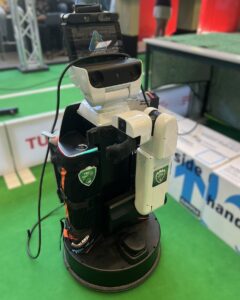
The paper reports an empirical case study of a master’s-level robotics course that integrates theoretical instruction with hands-on, human-centered robotic deployment. Drawing on observations, course material analysis, and interviews with instructors, the study identifies three key educational trade-offs: real-world readiness versus theoretical competence, component specialization versus system-level understanding, and structured guidance versus fostering creativity. These findings highlight how growing industry expectations and the increasing importance of human–robot interaction are reshaping robotics education and have direct implications for curriculum design. Understanding these competing demands is essential for designing robotics curricula that can meaningfully prepare future engineers for robots operating in human environments.