Economics, sociology, political science, and psychology have each used a similar experimental methodology to study human cooperation (i.e., economic games). Recently, a large international team effort led to the development the Cooperation Databank (CoDa) – a databank that contains the history of studies on human cooperation conducted in over 70 societies. CoDa is represented as a knowledge graph of over 300 predictor variables of cooperative behavior and was developed to allow scientists and practitioners to produce on-demand meta-analyses. CoDa is an open access resource that allows scientists to integrate meta-analytic methods into their day-to-day review of the literature, to identify opportunities for future research, and to optimize the design of future studies.
Currently, we are developing a technique to produce living meta-analytic web pages in which the results of the meta-analyses are automatically updated with new studies added to the knowledge graph. Such a resource will provide scientists and practitioners an up-to-date overview of how different factors affect cooperation (e.g., personality traits, communication, rewards and punishment). Furthermore, we are assessing the extent to which Large Language Models can support the annotation of studies to be included in the knowledge graph.
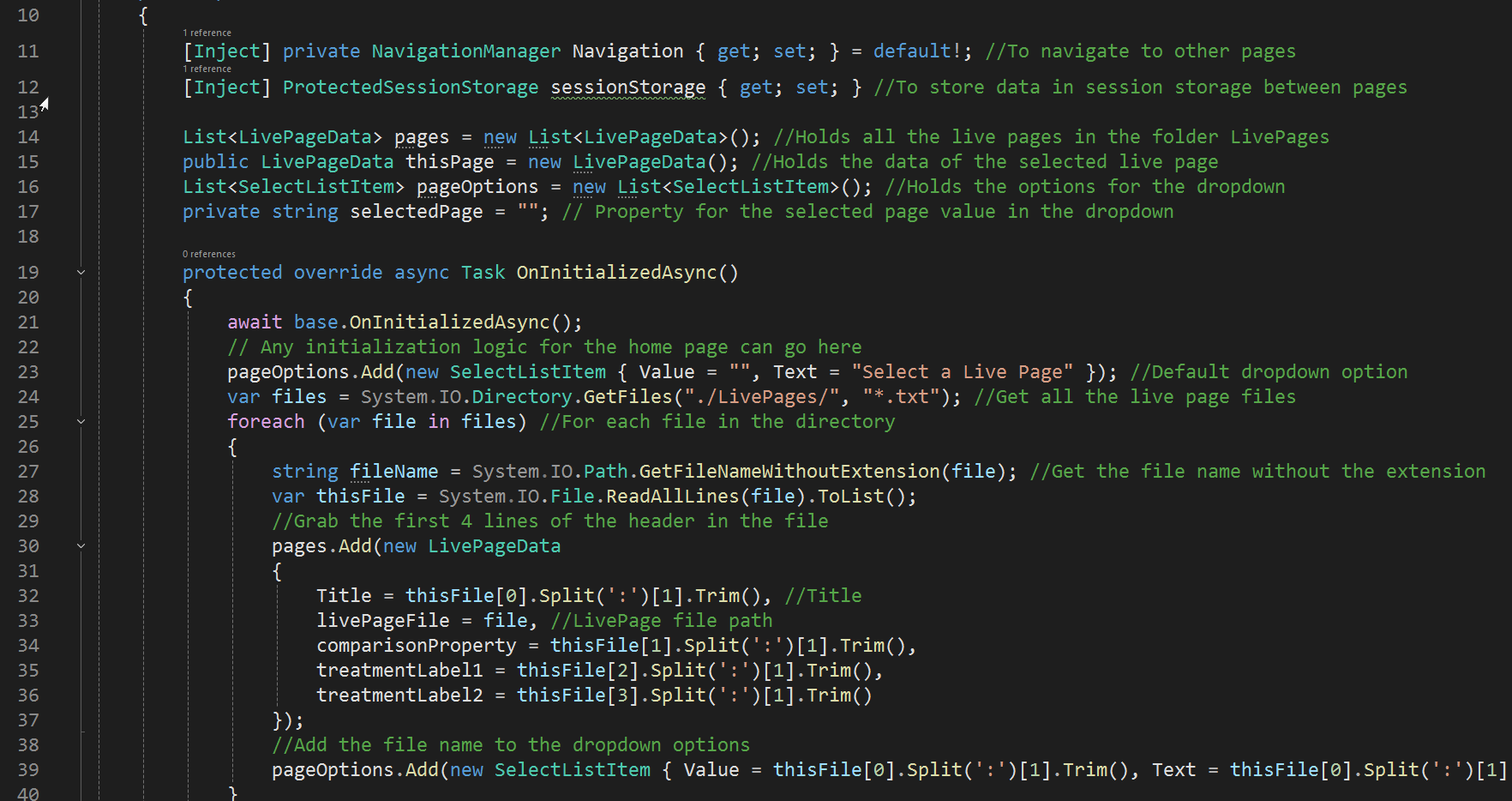
The Network Institute’s Tech Labs are currently developing the web application that creates these Live Pages. After careful consideration we choose Microsoft Blazor pages to create the application. This allows balancing the workload between the server and the client making manipulating a lot of data more efficient and give the user a smoother experience.
The aim is to make adding and changing these Live Pages as easy as possible by supplying simple text document where special tags will signify where dynamic elements will go. These elements can be simple numbers retrieves from the Knowledge Graph or complex analysis using webR. Even adding automatic graph/plots is very easy this way.
Currently we have several test pages running using a combination of live Sparql queries into the Coda Knowlodge Graph and statistical analysis using webR. Next we will test several new Live Pages to see if the current set of tags and analyses are sufficient. If so, we will start to build the first version of the Coda Live Pages website and publish it.