A recent survey in four European countries (results in Dutch) shows that most people think that a disaster is quite likely in their region within the next 5 years – and that they expect to be greatly affected by it. But being aware of risks is not enough to prepare. According to Special Eurobarometer 547, a solid 65% of Europeans feel they need more information to prepare for disasters.
 Correct information is essential for resilience during disasters. The more precise and up-to-date information people have on the (expected) impact of a disaster on themselves, the better their ability to respond in a timely and effective way. The more stressful a situation is perceived to be, the more urgently people will seek to clarify it in order to alleviate their own anxiety. In such situations, rumors can compensate for information and knowledge gaps. Uncertainty in a threatening situation paired with information scarcity can be a breeding ground for misinformation.
 In this study we ask:
- How does the presence of misinformation affect actions in mild compared to severe disasters?
- Are people more susceptible to act on misinformation during stressful situations (severe disasters) compared to less stressful situations (mild disasters)?
- Which factors “protect” against a potential susceptibility that can be addressed in the cold phase?
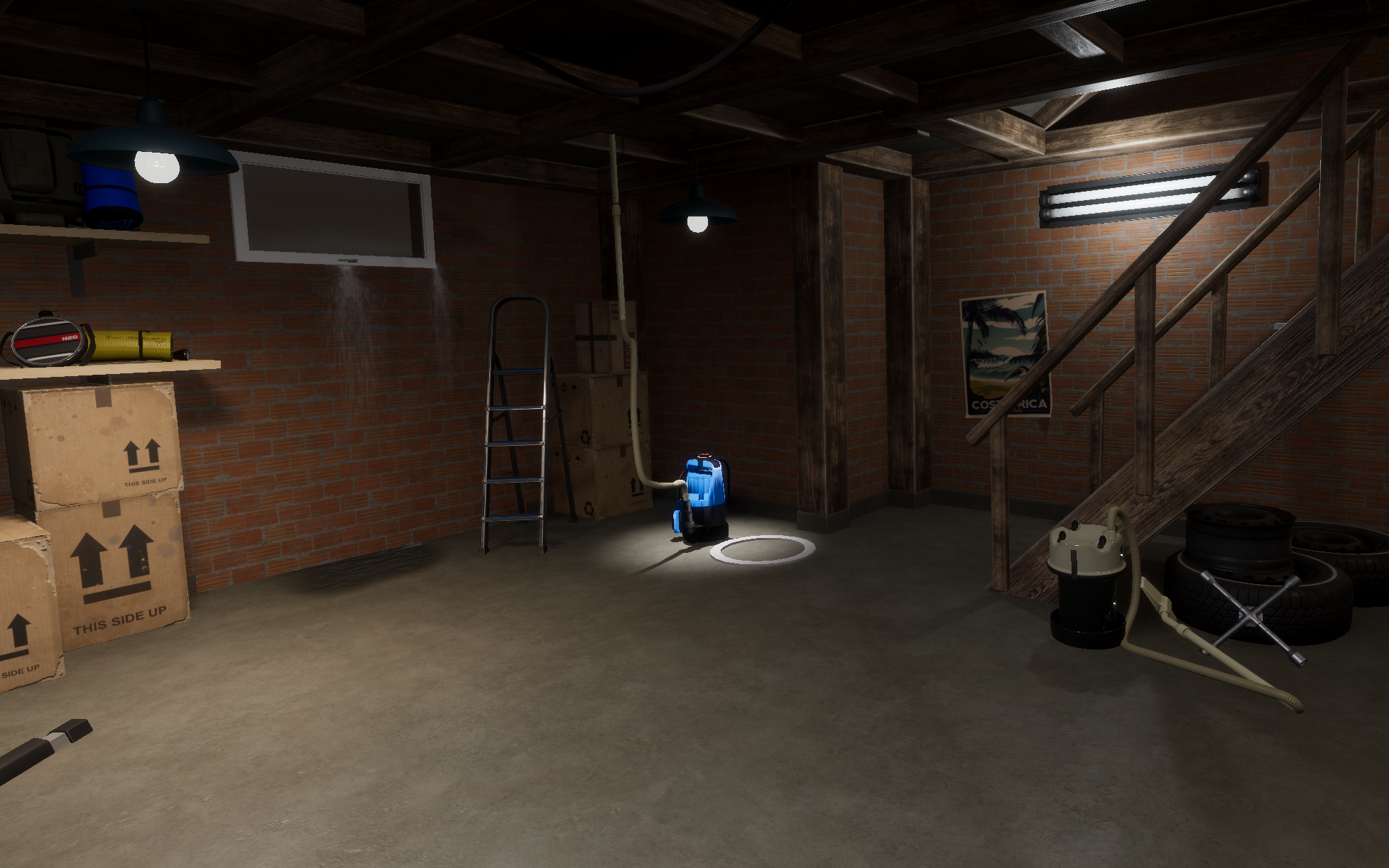
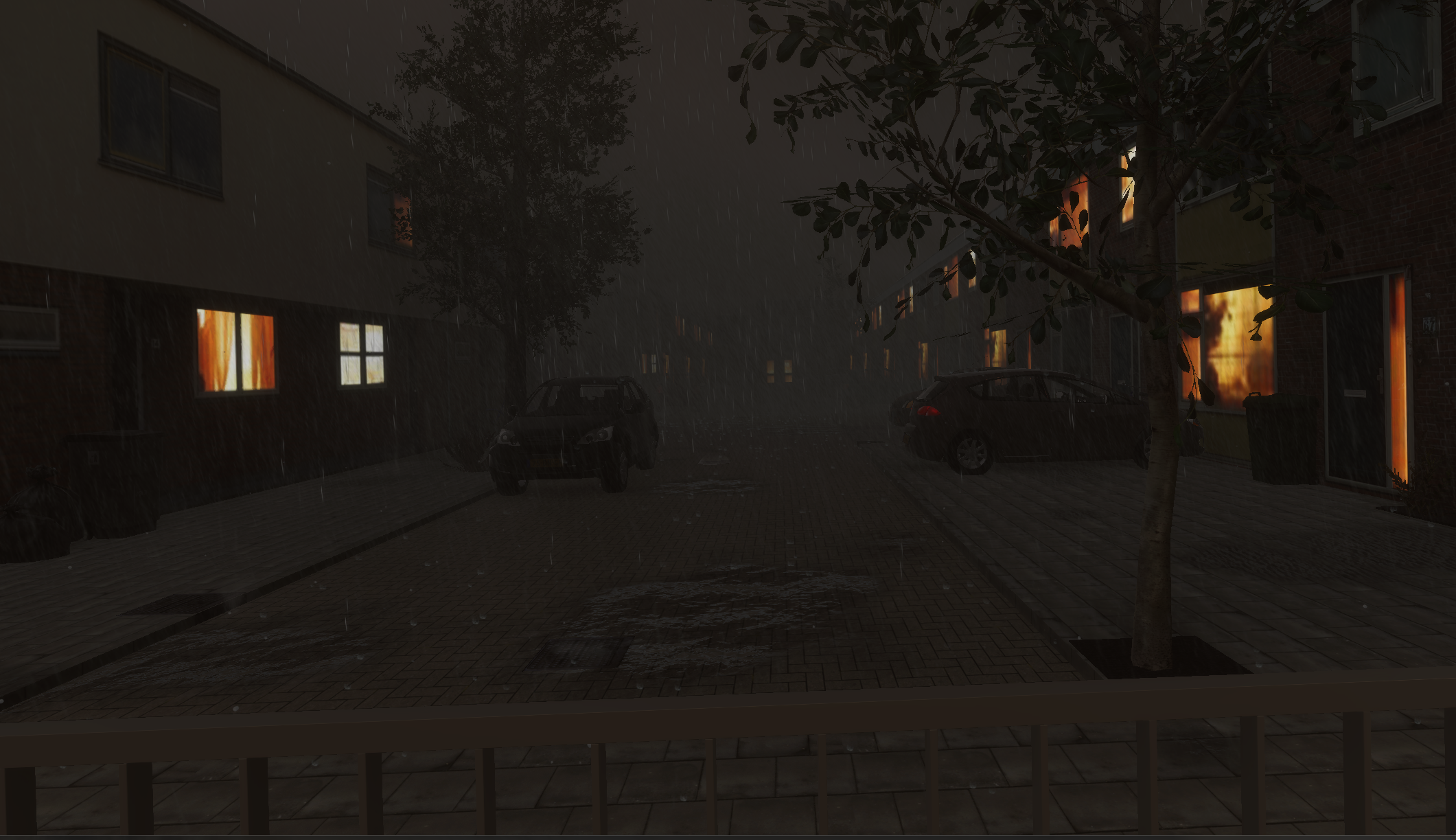
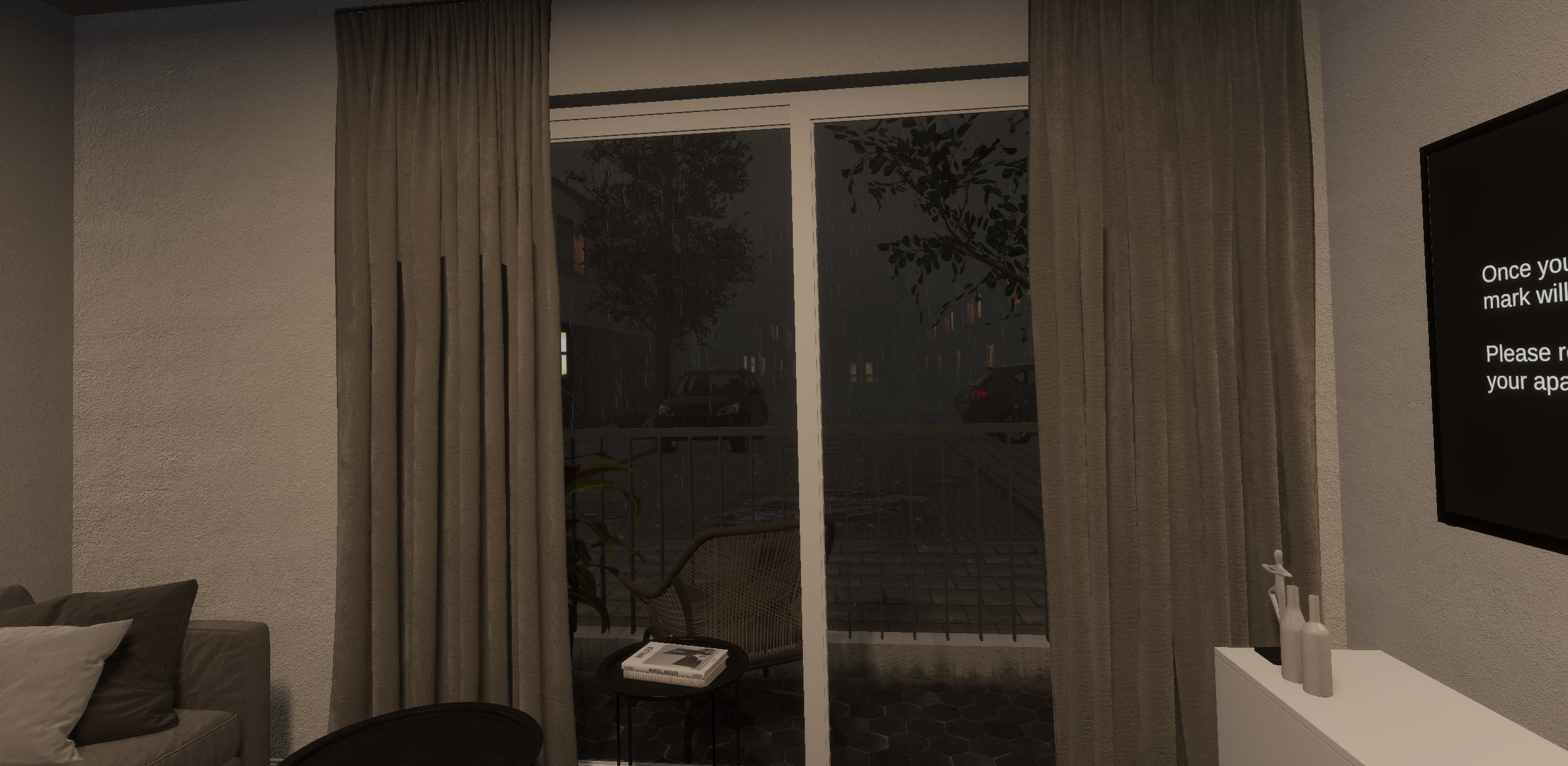
The Tech Labs of the Network Institute has developed the Virtual Reality application that simulates a flooding disaster. During the trial the user is instructed when standing in front of the TV to first explore the house and visit several key locations. Then the user will receive information on a virtual tablet that mimics several X posts and show both correct information and misinformation about actions to take during such a disaster. The user then get to do two of four possible tasks with the goal to pick the right ones. The used can choose from:
- Picking up the passport and medkit from the two bedrooms
- Plugging the drains with towels in the bathroom
- Turning of the gas mains in the hall
- Turning on the water pump in the basement
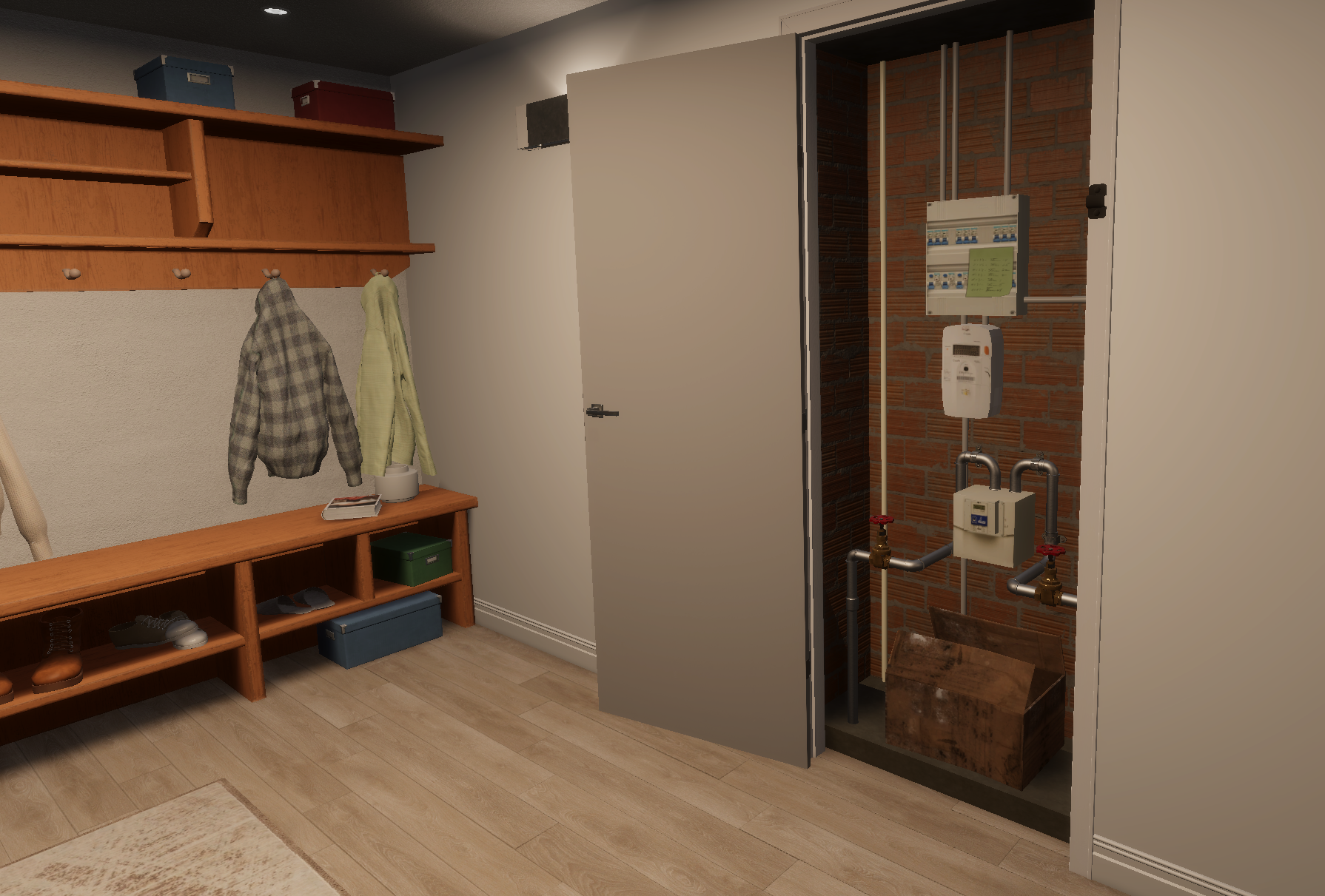 Once done, the user will be told if their choices were the correct ones and what the advantages and disadvantages could be of the four action. At the end the user get some additional information at the metering closet about the gas and in the basement about water entering the house (the water level is rising rapidly).
Data collection was done in Gdansk, Poland and at the Network Institute’s Tech Lab facilities at the VU University Amsterdam during the last months of 2025.